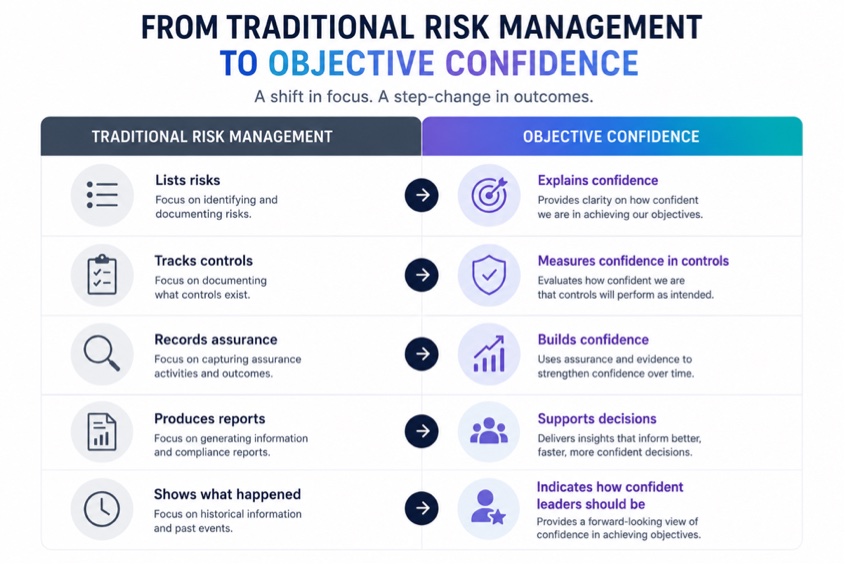
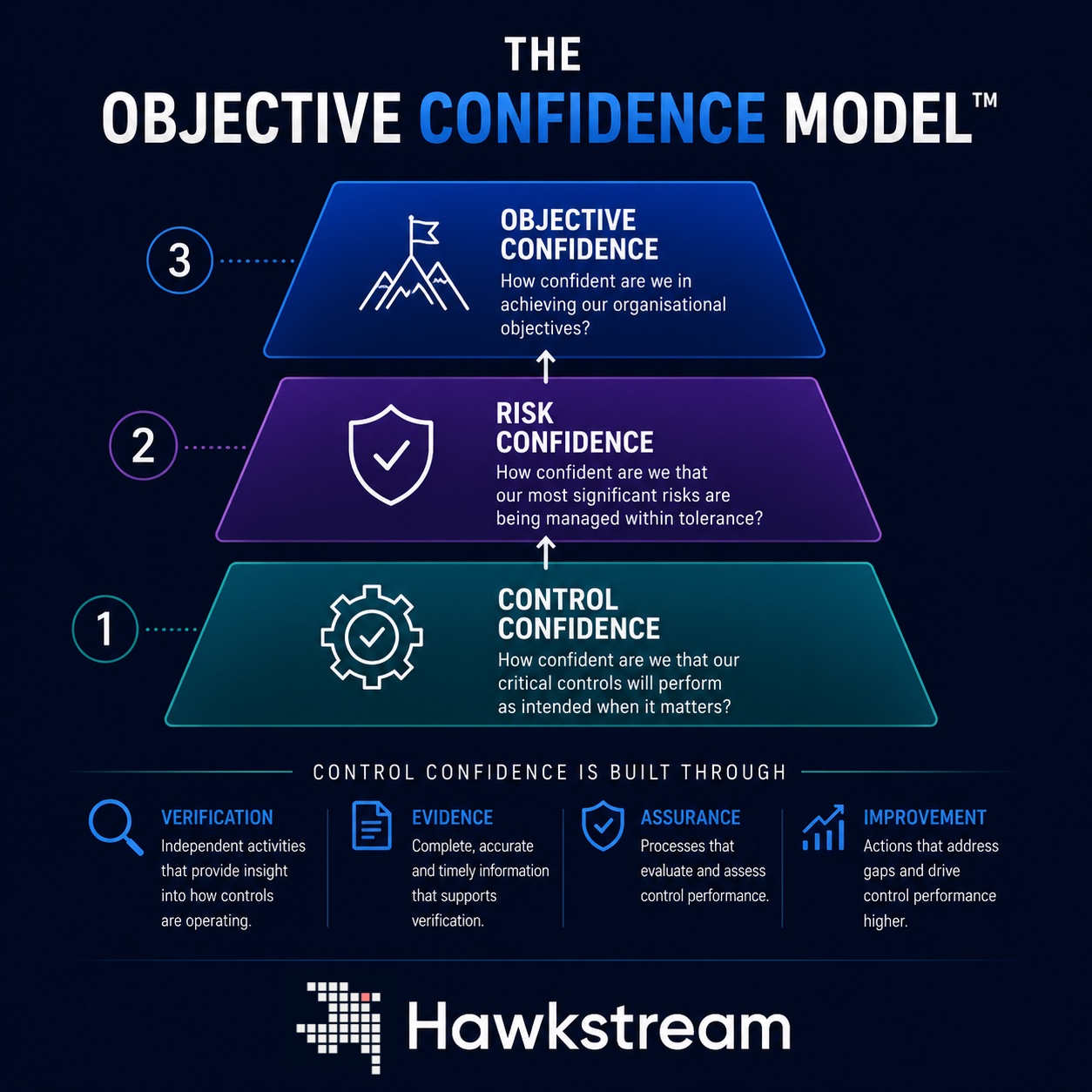
Every organisation has objectives.
Every organisation exists to achieve objectives. Whether they relate to safety, operational performance, financial outcomes, compliance, customer service or strategic growth, leaders need confidence that these objectives will be achieved.
The problem isn't managing risk. It's understanding confidence.
Most organisations invest heavily in risk registers, controls, audits and assurance activities. Yet executives still ask one simple question:
"How confident should we be that we will achieve our objectives?"
Traditional risk management tells us what could happen.
The Objective Confidence Model™ helps us understand how confident we should be.
Introducing the Objective Confidence Model™
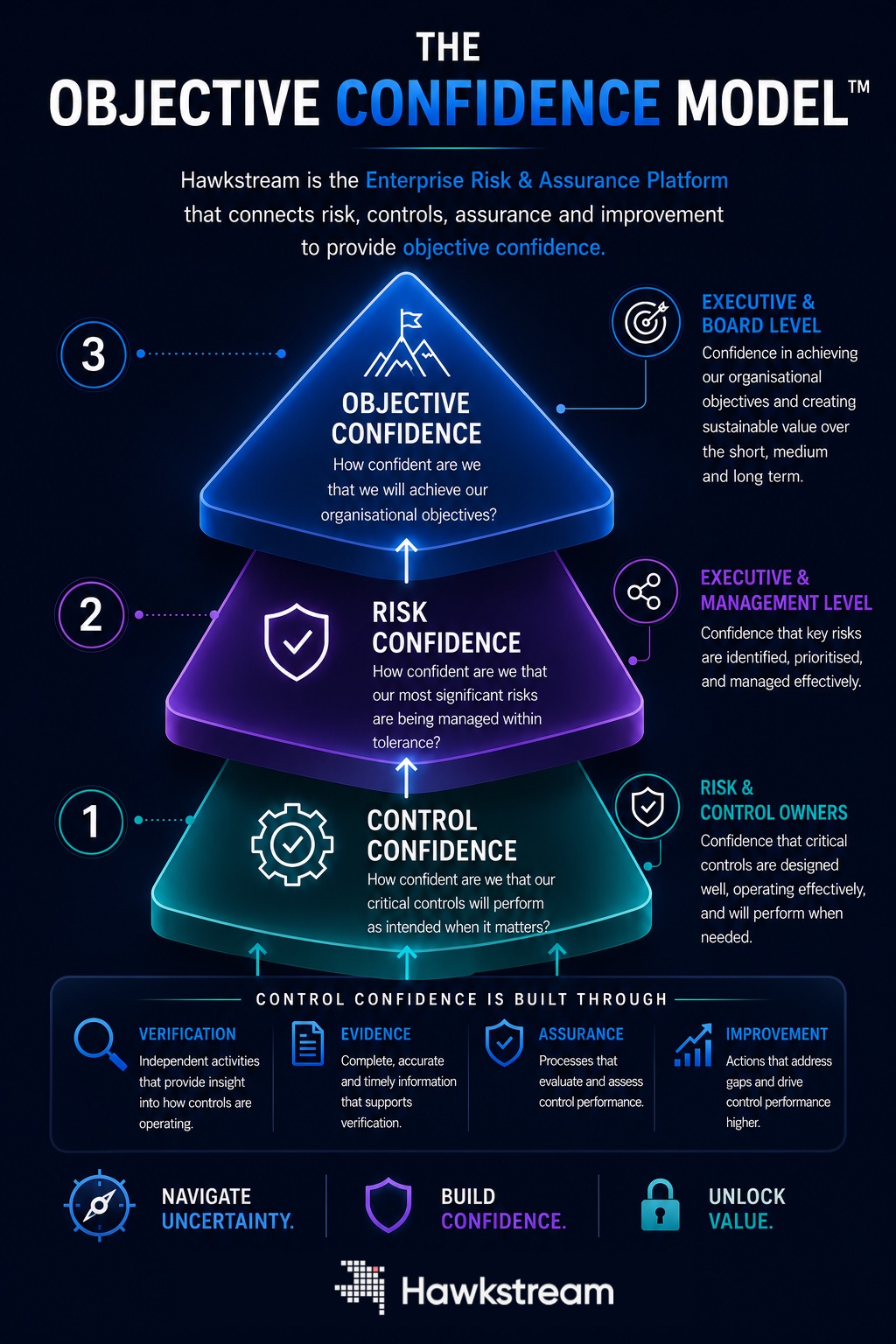
Three simple levels.
Level 1: Objective Confidence
Confidence that organisational objectives will be achieved.
Level 2: Risk Confidence
Confidence that the organisation's most significant risks are being effectively managed.
Level 3: Control Confidence
Confidence that critical controls will perform as intended when they matter most.
Confidence doesn't happen by accident.
It is built.
Control Confidence is built through:
- ✔ Verification
- ✔ Evidence
- ✔ Improvement
- Every verification...
- Every assessment...
- Every improvement...
- contributes to confidence.
Confidence Flow upwards
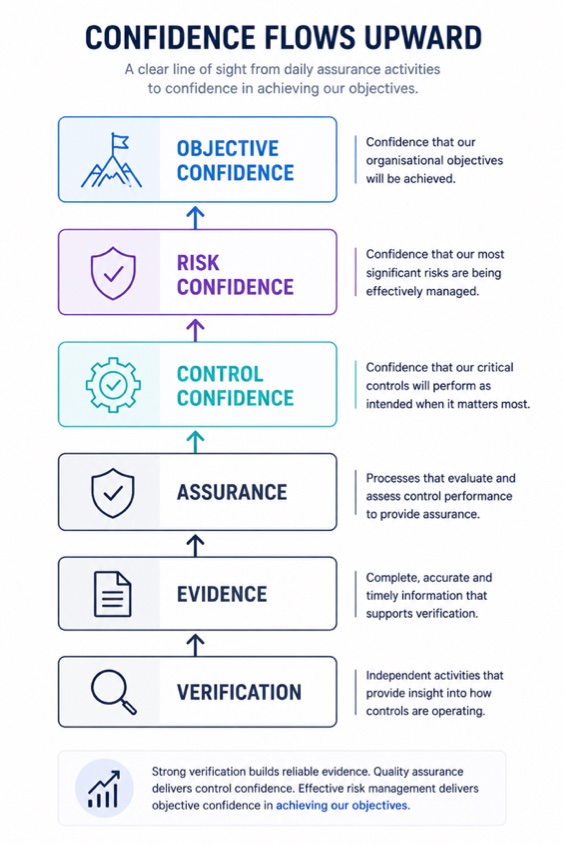
Every verification activity contributes to control confidence.
Every control contributes to risk confidence.
Every managed risk contributes to objective confidence.
The Value of Objective Confidence Model
Objective Confidence transforms risk and assurance activities into meaningful insights that help leaders make better-informed decisions, prioritise resources effectively, and improve organisational performance.
Better Decisions
Leaders understand not only the risks they face, but how confident they should be in managing them.
Better Prioritisation
Resources are directed where confidence is lowest and where improvements will have the greatest impact.
Better Outcomes
Building confidence leads to better governance, stronger resilience and improved organisational performance.